
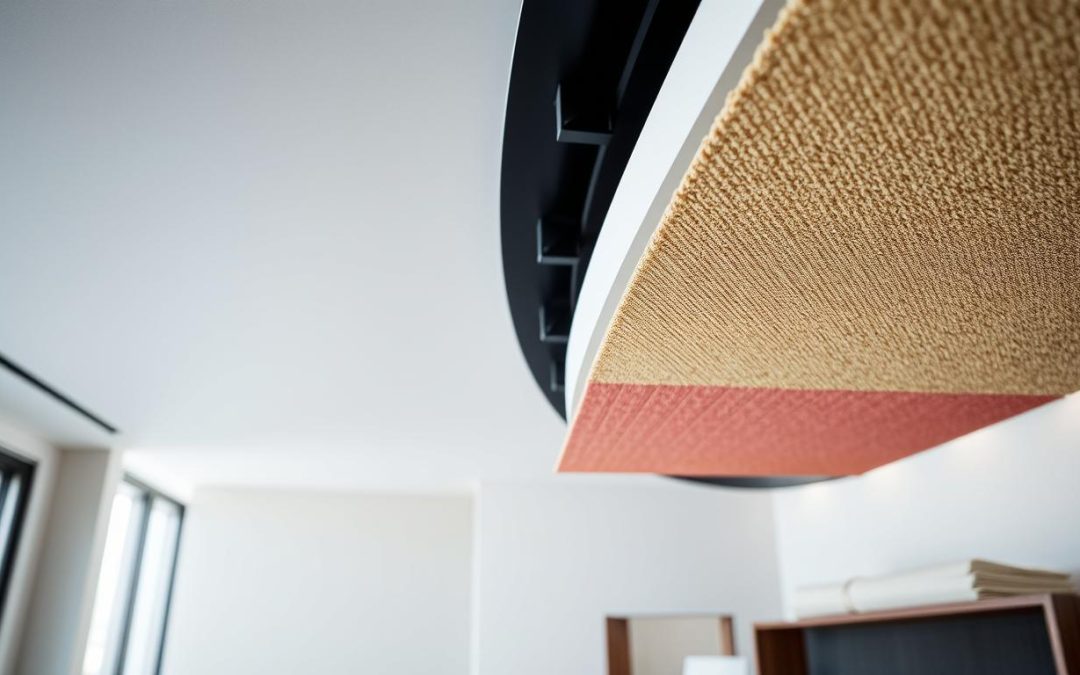
Being exposed to loud noises for too long can really affect us. It can make us stressed, disrupt our sleep, and lower our focus. Installing soundproofing material in your ceiling can help a lot.

This way, you can make your home much quieter. Acoustic insulation can turn your ceilings into a peaceful space. It makes your home a calm retreat from daily life’s noise.
Key Takeaways
- Reducing noise pollution improves overall well-being.
- Soundproofing materials can significantly decrease noise levels.
- Installing acoustic insulation can enhance home comfort.
- A quieter home environment can lead to better sleep and reduced stress.
- Soundproofing is a worthwhile investment for homeowners.
Understanding Acoustic Insulation
Acoustic insulation is key to reducing unwanted noise and improving sound quality. It stops sound from moving between rooms or from outside. This makes spaces more comfortable and productive.
In homes, offices, schools, and commercial buildings, noise reduction solutions are vital. Acoustic insulation helps cut down echo and reverberation. This leads to clearer sound.
Sound absorption panels are a crucial part of acoustic insulation. They soak up sound energy instead of bouncing it back. This cuts down echo and makes the room sound better.
Experts say, “Acoustic insulation is not just about cutting down noise. It’s about making a space good for work and rest.” It brings many benefits, like:
- Improved concentration and focus
- Enhanced overall well-being
- Better sound quality for music and speech
Knowing how acoustic insulation works helps people choose the right solutions. It’s a smart choice for any space, whether it’s a home office or a big building. It makes the environment more comfortable and productive.
Benefits of Acoustic Insulation
Acoustic insulation makes spaces quieter and more comfortable. It cuts down on unwanted noise. This makes it easier to talk or enjoy media without interruptions.
It also reduces echo and reverberation, making places more peaceful. This is great for home theatres, recording studios, or open-plan offices where sound quality matters a lot.
Acoustic insulation also helps with privacy by minimizing sound transmission between rooms. This is key in homes, keeping private talks private and reducing noise from other rooms or outside.
Using top-notch sound insulation products boosts a space’s sound quality. An effective acoustic barrier makes the environment quieter, free from outside noise.
Some main benefits of acoustic insulation are:
- Improved sound clarity and quality
- Less noise pollution and disturbance
- More privacy with less sound passing through
- Increased comfort and lower stress levels
Investing in acoustic insulation creates quieter, more comfortable spaces. It’s good for homes, offices, or recording studios. The benefits of acoustic insulation are clear, making it a smart choice for anyone wanting better sound quality.
Types of Acoustic Insulation Materials
Choosing the right acoustic insulation material is key for soundproofing. There are many materials, each with its own benefits.
Materials like mineral fiber, fiberglass, foam, and recycled composites are used. They trap sound waves well because they are porous. Mineral fiber stands out for its density and sound absorption, making it a top pick for sound treatment.
Fiberglass is also popular because it’s affordable and good at reducing noise. It’s often used in lofts and walls for soundproofing. Foam insulation is great because it absorbs sound and keeps warmth in, making it useful for many uses.

Recycled composite materials are becoming more popular for being eco-friendly and good at sound absorption. They’re made from recycled stuff, helping to cut down on waste and offering a green solution for sound insulation.
Experts say, “The secret to good acoustic insulation is how well it absorbs sound, not just lets it bounce back.” This shows why picking the right material is so important for sound treatment.
- Mineral fiber: High density, effective sound absorption
- Fiberglass: Affordable, effective noise reduction
- Foam: Versatile, provides thermal and acoustic insulation
- Recycled composites: Eco-friendly, effective sound absorption
In summary, there’s a wide range of acoustic insulation materials to choose from. Knowing what each material does helps people pick the best one for their needs. This way, they can get the best soundproofing results.
Key Areas for Installation
To get the most out of acoustic insulation, it’s key to know where to put it. The right sound damping material can cut down noise and boost sound quality in different parts of a building.
Focus on ceilings, walls, and floors for installation. Each spot is important for soundproofing and can benefit from the right acoustic insulation solutions.
Ceilings are crucial for acoustic insulation as they greatly affect sound quality in a room. Adding sound damping material in ceilings can lessen noise from above and outside.
Walls
Walls are also key for acoustic insulation. They can be treated with acoustic insulation materials to stop sound leaks and cut down noise between rooms.
Floors
Floors, mainly in multi-story buildings, gain a lot from acoustic insulation. It helps reduce the sound of footsteps and other noises from below or above.
But, acoustic insulation isn’t just for ceilings, walls, and floors. Don’t forget about doors, windows, and any gaps or joints in the building. These spots need attention for full soundproofing.
Here are some tips for installing sound damping material:
- Find out where the main noise comes from.
- Pick the right acoustic insulation for each area.
- Make sure it’s installed correctly to work best.
By focusing on these areas and tips, you can cut down noise and improve sound quality in your building.
The Installation Process
To get the most out of acoustic insulation, knowing how to install it is essential. Good noise reduction solutions need the right installation methods.
Homeowners face a choice between doing it themselves or hiring a pro. For small areas, DIY can save money and give you control. But for bigger or more complex jobs, professional installation is best. It ensures the insulation works right.
Deciding between DIY and a pro depends on several things. These include the area size, insulation type, and DIY comfort level. If you’re doing it yourself, make sure to follow the instructions and stay safe.
For big projects or advanced sound absorption panels, get a pro. They have the skills and tools to do the job well. This means your insulation will work its best.
In short, knowing how to install and choosing the right method is key. Whether DIY or a pro, the goal is to install correctly. This way, you’ll enjoy a quieter home.
Cost Considerations
To budget for acoustic insulation, knowing what affects the cost is key. The total cost includes material and installation expenses.
The price of sound insulation products changes based on the material. Fiberglass batts are cheaper than high-performance panels. The material’s thickness also matters, with thicker ones costing more.
The NRC (Noise Reduction Coefficient) rating is another important factor. It shows how well a material absorbs sound. Materials with higher NRC ratings, which absorb sound better, are pricier.

Installation costs are also crucial. They depend on the ceiling’s size and how complex the job is. For example, ceilings with lots of obstructions, like ductwork, need more work and cost more.
To budget better, consider these key factors:
- Material Type: Different materials have different prices.
- Material Thickness: Thicker materials cost more.
- NRC Rating: Higher NRC ratings often mean higher costs.
- Ceiling Size: Larger ceilings need more material and labor.
- Installation Complexity: More complex jobs cost more in labor.
Understanding these factors helps you estimate your acoustic insulation project’s cost. This way, you can make smart choices about your acoustic barrier investment.
Building Regulations and Standards
It’s key to know about building rules and standards for good acoustic insulation. Insulation isn’t just about cutting down noise. It also makes sure buildings are safe and comfy for people living there.
The Sound Transmission Class (STC) system rates how well insulation blocks sound. A higher STC rating means better soundproofing. This helps builders and homeowners pick the right insulation. It’s important to look at the STC rating to meet building rules.
In the UK, building rules set the minimum standards for sound insulation. These rules help keep people healthy and happy by making sure buildings are quiet enough. Following these rules is not just legal. It also makes a building better overall.
To make sure insulation meets standards, you should:
- Choose materials with the right STC ratings for your needs.
- Follow the maker’s instructions for installing.
- Make sure a skilled person does the installation.
By following these tips and knowing the building rules, you can make your building quieter. This makes your home or office a better place to be.
Selecting the Right Acoustic Insulation
Choosing acoustic insulation needs careful thought. Its success depends on how well it absorbs sound, the material used, and its thickness.
It’s important to look at the Noise Reduction Coefficient (NRC) rating. This shows how well a material absorbs sound. A higher NRC rating means better sound absorption. For example, materials with an NRC of 0.8 or more are good for sound damping.
The type of material used is also key. You can choose from fiberglass, mineral wool, and open-cell foam. Each has its own sound absorption abilities. The thickness of the material matters too. Thicker materials usually block sound better.
Experts say, “The secret to good acoustic insulation is knowing what your space needs. Then pick materials that fit those needs.”
“Choosing acoustic insulation should be a detailed process. You need to understand the space’s sound needs and how much sound reduction you want.”
In summary, picking the right acoustic insulation involves looking at NRC rating, material type, and thickness. By understanding these and choosing wisely, you can dampen sound effectively. This improves the sound quality in any space.
Conclusion: The Value of Acoustic Insulation
Choosing acoustic insulation for your ceiling is a smart move. It makes your living or working space better. It cuts down on unwanted noise and boosts sound quality, making your area more comf