
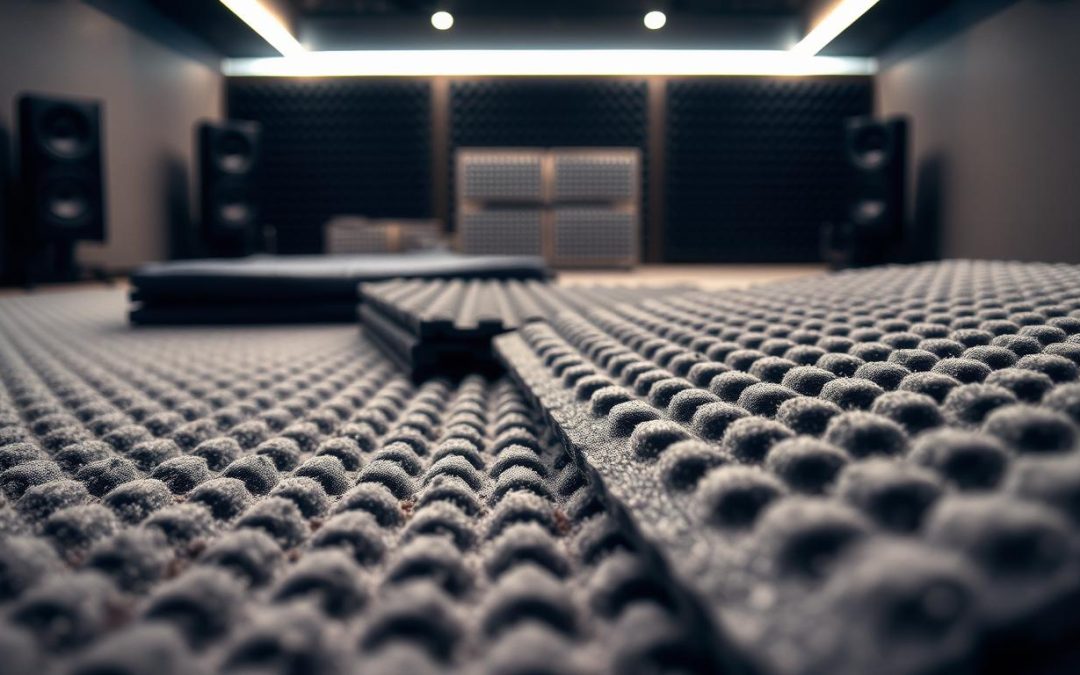
Noise reduction is key to a comfy living or working space. Soundproofing mats help a lot by cutting down noise. They soak up sound energy, making rooms quieter.

Top-notch noise reduction mats use materials that grab sound waves well. They’re used in homes and offices to make sound better.
Key Takeaways
- Effective noise reduction is crucial for a comfortable environment.
- Soundproof mats absorb sound energy, reducing echo and reverberation.
- High-quality materials are essential for effective soundproofing.
- These mats are used in various applications, including residential and commercial buildings.
- Improved acoustic performance is a significant benefit of using soundproofing mats.
Understanding Soundproofing Mats
Soundproofing mats are made for different sound issues. You’ll find acoustic insulation mats, sound deadening mats, and soundproof underlayment. Knowing what each does is key to good soundproofing.
Acoustic insulation mats help block sound through walls, floors, and ceilings. They use materials like mineral wool or fiberglass. These mats are great for places like recording studios, home theaters, and bedrooms.
Sound deadening mats cut down vibrations and noise from footsteps and movement. They’re used in cars and buildings to lessen foot traffic noise. These mats work by absorbing energy and turning it into heat, which reduces noise.
Soundproof underlayment is for under flooring to lessen impact noise. It’s perfect for buildings with many floors where footstep noise is a problem. Materials like rubber, cork, or special underlayment products are used to block sound.
Choosing the right soundproofing mat depends on the job. Think about the noise you want to block, the building’s structure, and the mat’s materials. Each factor affects the best choice for you.
Key Materials Used in Soundproofing Mats
Soundproofing mats are made from different materials. Each one has special properties that help block or absorb sound. The most common are rubber, foam, and fiberglass.
Rubber mats are tough and flexible. They’re great for places where sound needs to be absorbed well. Foam mats are light and simple to put up. They’re often used in homes. Fiberglass mats block sound well because they’re dense.
The density and thickness of these mats matter a lot. A denser mat blocks sound better because it has more mass. Thicker mats also block sound better, as they have more material to absorb sound waves.
Choosing the right soundproofing mat depends on the material and its density and thickness. For example, a thick rubber mat is good for a home recording studio. A thin foam mat might be enough for a home office that needs a bit of sound dampening.
- Dense materials like rubber and fiberglass offer superior sound blocking.
- Thicker mats generally provide better sound isolation.
- The choice of material should be based on the specific application and desired level of soundproofing.
Factors to Consider When Choosing Soundproofing Mats
Choosing the right soundproofing mats is key to good soundproofing. The mats must fit the space’s specific needs well.
Assessing Your Needs
Start by figuring out what you need. Look at the noise level, the size of the room, and how you plan to use it. For example, a recording studio needs different solutions than a living room.
Think about the kind of noise you want to block. Is it airborne noise like voices or music? Or is it impact noise like footsteps? Knowing this helps pick the best mats.
The room’s size matters too. Bigger rooms need more mats or bigger ones. Smaller rooms might need fewer or smaller mats.
How you plan to use the room also matters. For professional recording or home theaters, you need top-notch mats. For everyday living areas, standard mats might be enough.
- The material of the mats and how well they block sound.
- The mats’ thickness and density, which affect their sound-blocking power.
- How easy they are to install, whether you can do it yourself or need a pro.
By thinking about these points and what you need, you can find the right mats. They’ll help reduce noise and improve your space’s sound quality.
Performance Characteristics of Soundproofing Mats
It’s key to know how soundproofing mats work to pick the right one. These mats, or acoustic insulation mats, soak up sound to cut down noise. Their success depends on a few important traits.
The sound absorption coefficient is a big deal. It shows how much sound energy the mat takes in, not sends back. A high score means better sound blocking. For example, acoustic insulation mats with high scores are great for studios and home cinemas.
Sound transmission loss is another key trait. It shows how much sound gets through the mat. Mats with high scores are better at stopping sound from moving through walls, ceilings, and floors. Sound deadening mats are used in cars to make them quieter.

It’s also crucial to look at how durable and resistant to the environment the mats are. Top-notch mats should handle different temperatures and humidity well. How easy they are to install and maintain also matters for their real-world use.
To wrap it up, the traits of soundproofing mats, like sound absorption and transmission loss, are essential. Knowing these helps you choose the right mats for your needs.
Ideal Applications for Soundproofing Mats
Soundproofing mats are key in making quieter spaces. They help block sound and are used in many places.
In residential buildings, they go under floors to stop noise from moving up or down. They’re also great in commercial establishments like offices and studios, where keeping noise down is important.
In homes, these mats fit under different floors like laminate and hardwood. They make living spaces quieter. In businesses, they cut down ambient noise, making the sound better.
Soundproofing mats work well in many places. Here are some examples:
- Home theaters and media rooms
- Recording studios and music practice rooms
- Offices and conference rooms
- Residential apartments and condominiums
Using soundproofing mats can greatly improve how well a space sounds. It makes places more comfortable and productive.
Comparing Different Brands of Soundproofing Mats
Looking for the best soundproofing solution often means comparing different brands. There are many options, so it’s key to know what each brand offers.
Well-known brands like AcoustiGuard, Soundproofing Company, and GIK Acoustics provide top-notch soundproofing products. Each brand has its own strengths and weaknesses. It’s important to look at material quality, how well they work, and their price.
AcoustiGuard is famous for its dense soundproofing materials. These materials greatly reduce noise. Their mats are easy to put up and work well in places like home theaters and recording studios.
Soundproofing Company has a range of products for different needs. Their mats are made from top-quality materials and are built to last and work well.
“The right soundproofing material can make all the difference in achieving a quiet and peaceful environment.” – Soundproofing Expert
GIK Acoustics is also well-liked for its soundproofing solutions. Their products are easy to use and are good at cutting down noise.
When you’re comparing these brands, think about what you need for your project. Consider the type of noise you want to block, how much space you have, and your budget. These things help decide which soundproofing products are best for you.
- AcoustiGuard: High-density materials, easy installation
- Soundproofing Company: Variety of products, durable and effective
- GIK Acoustics: Easy to use, effective noise reduction
By looking closely at what each brand offers, you can make a smart choice. This way, you can find the best soundproofing mats for your needs.
How to Install Soundproofing Mats
To get the most out of soundproofing mats, you must install them right. The way you install them can change based on the mat type and where you put it.
Preparation is Key
Make sure the surface is clean and dry before you start. Any dirt or moisture can mess up the mat’s adhesive. This can make it less effective at blocking noise.
Different Installation Methods
There are a few ways to put in soundproofing mats:
- Adhesive installation: Many mats have a self-adhesive side. Check if the surface works with the adhesive.
- Mechanical fastening: Some mats need screws or nails, mainly in busy areas or where the mat might get stressed.
- Combination methods: Sometimes, using both adhesive and screws is best.
Step-by-Step Installation Guide
- Measure the area for the mat to figure out how many you need.
- Clean the surface well and let it dry.
- Start applying the mat from the middle, moving outwards to avoid air bubbles.
- Make sure the mat is well attached, using adhesive or screws as needed.
- Make sure the edges and joints are sealed well to stop sound from getting through.
- Don’t stretch the mat too much, as it can wear out faster.
- For big areas, lay the mats in a staggered pattern to better block sound.
By following these steps and tips, you can make sure your soundproofing mats work their best. This will help you get the best noise reduction.
Maintenance and Care of Soundproofing Mats
Keeping your soundproofing mats in good shape is key. It’s important to clean and check them often.
Cleaning Soundproofing Mats: Use a soft-bristled brush or a dry cloth to gently remove dust and debris from the surface of the mats. For more thorough cleaning, a damp cloth can be used, but ensure the mat is completely dry before reinstalling it.
Inspection is Key: Regularly check your soundproofing mats for signs of wear and tear, such as cracks, tears, or significant compression. If you notice any damage, consider replacing the mat to maintain optimal soundproofing performance.

To make your acoustic insulation mats last longer, avoid exposing them to too much moisture or extreme temperatures. Proper handling and storage when not in use can also help maintain their quality.
- Check for manufacturer guidelines on specific maintenance recommendations.
- Ensure the mats are properly secured to prevent shifting or bunching.
- Monitor the mats’ performance over time and adjust as necessary.
By following these simple maintenance and care tips, you can ensure your soundproofing mats continue to provide effective acoustic insulation for years to come.
Environmental Considerations
The soundproofing industry is now focusing more on being green. Soundproofing mats, key in cutting