
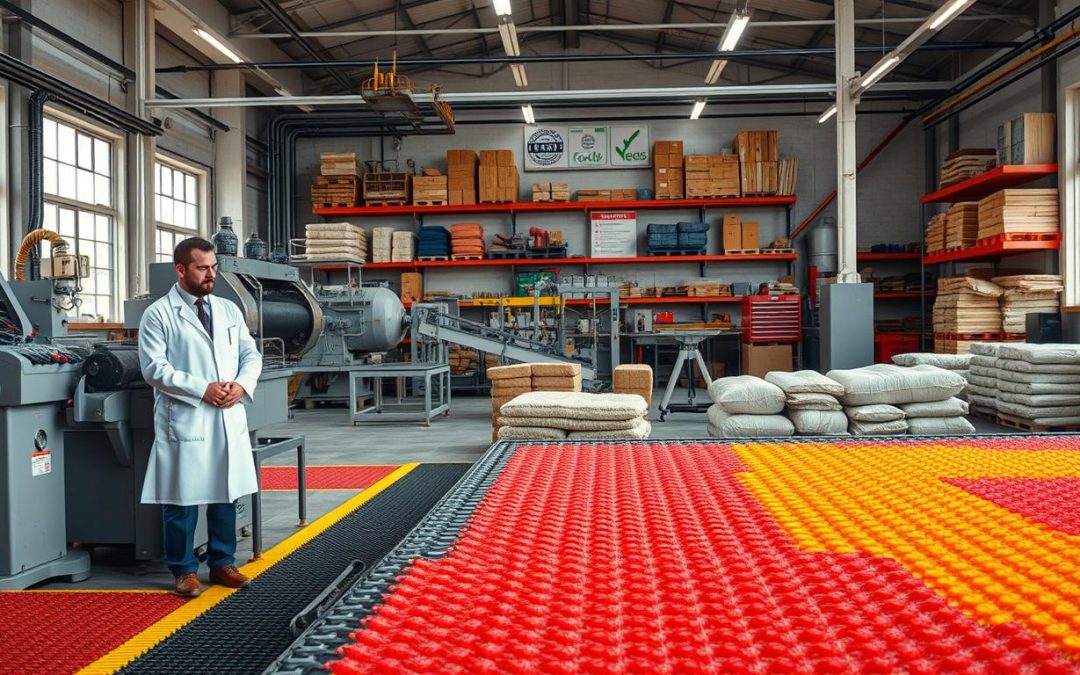
The manufacturing world is moving towards sustainable production practices. This change is to lessen our environmental footprint. One exciting method is the vulcanization of recycled rubber mats. It turns old materials into strong and lasting goods.

The vulcanization process is key to making top-notch rubber items. By using recycled rubber, makers cut down on waste. They also make more eco-friendly products.
Key Takeaways
- The vulcanization of recycled rubber mats is a key aspect of sustainable production practices.
- Recycled rubber products offer a more eco-friendly alternative to traditional rubber products.
- The vulcanization process enhances the durability and longevity of rubber products.
- Sustainable production practices are becoming increasingly important in the manufacturing industry.
- The use of recycled rubber reduces waste and supports environmental conservation.
What is Vulcanisation?
Charles Goodyear discovered vulcanisation in 1839. It changed the rubber industry by making rubber stronger. Vulcanisation is a way to make natural rubber or similar materials last longer. It uses sulfur or other chemicals to link rubber chains together.
This makes the rubber stronger and more flexible. Vulcanised rubber can handle heat, cold, and wear better than regular rubber. It’s key for making rubber mats that last and work well in different conditions.
The vulcanisation process has several steps. First, the rubber is prepared. Then, sulfur or other chemicals are added. After that, heat and pressure are applied.
This makes the rubber not just stronger but also better at handling chemicals and temperature changes. By using vulcanisation, makers can create top-notch rubber mats from recycled rubber. This supports green practices and helps products last longer.
- Vulcanisation makes rubber products last longer.
- It uses sulfur or other chemicals to link rubber chains.
- The process is key for making eco-friendly rubber mats.
- Vulcanised rubber is better at handling environmental stresses.
In short, vulcanisation is a key step in making rubber products last and be sustainable. It’s used in making recycled rubber mats. This shows a big commitment to being green and sustainable in manufacturing.
The Journey of Recycled Rubber
Recycled rubber shows how we can turn old tires into something new. This journey saves natural resources and cuts down on waste. It’s all about earth-conscious production methods.
It starts with collecting old tires and other waste rubber. Then, they go through mechanical and chemical treatments. Breaking down the sulfur bonds in vulcanized rubber is key. This makes the rubber reusable.
“The recycling of rubber through devulcanization represents a significant advancement in eco-conscious manufacturing solutions.”
The devulcanization process includes shredding, grinding, and chemical treatment. These steps turn the raw material into things like rubber mats. It’s a way to give old materials a new life and support sustainable practices.
Using recycled rubber in making products is good for the planet. It helps manufacturers make quality items while being kind to the environment. This shows the value of new recycling methods in today’s industry.
The Eco-friendly Benefits of Recycled Rubber Mats
Choosing recycled rubber mats helps reduce environmental waste. They are durable and absorb shocks well. These mats are made from recycled rubber, showing strong support for green technology in production and an eco-friendly supply chain.
These mats are good for the planet and practical too. They last long, absorb shocks, and prevent slipping. This makes them great for playgrounds and industrial floors.

Making these mats involves using materials that would be thrown away. This cuts down on the need for new materials and waste. It helps make manufacturing more sustainable and supports green practices in the supply chain.
Also, these mats don’t need to be replaced often. This means less waste and a smaller environmental footprint. By choosing recycled rubber mats, we help the planet and get a top-notch product.
Steps in the Vulcanisation Process
Vulcanisation changes raw rubber into a strong and flexible material. It’s perfect for many uses.
To vulcanise rubber, it’s heated with sulfur or peroxides. This is done under pressure or with hot steam or air. It makes the rubber better at handling heat, cold, and chemicals.
There are two main ways to vulcanise: Pressure Vulcanization and Free Vulcanization.
Pressure Vulcanization and Free Vulcanization
- Pressure Vulcanization uses high pressure and heat in a mould. This makes products with exact shapes and smooth surfaces.
- Free Vulcanization vulcanises rubber without a mould. It’s great for items that need to be flexible or have odd shapes.
Choosing between these methods depends on what the recycled rubber mats will be used for. It also depends on the final product’s needed qualities.
Using sustainable production practices and renewable energy in manufacturing helps reduce environmental harm. This is true for the vulcanisation process.
Quality Control in Eco-friendly Manufacturing
In eco-friendly manufacturing, quality control is key. It’s not just a step; it’s a foundation. Making sure products are up to standard is vital for keeping customers happy and trusting. Eco-friendly manufacturing uses sustainable materials and environmentally friendly processes in every stage.
Quality control in eco-friendly manufacturing covers many areas. It includes testing raw materials, watching over production, and checking finished products. For example, recycled rubber mats are tested for durability and how well they handle the weather. Experts say, “Quality control is vital to make sure eco-friendly products meet and go beyond what customers want.”
“The future of manufacturing lies in sustainability, and quality control is the key to unlocking this potential.”
Good quality control in eco-friendly manufacturing has many benefits. It makes sure products last longer, which means they don’t need to be replaced as often. It also makes customers happier because they get what they expect. A strong quality control system can really help a company stand out in the market.
- Rigorous testing of raw materials
- Monitoring of production processes
- Inspection of finished products
By focusing on quality control at every step of eco-friendly manufacturing, companies can make sure their products are both green and of high quality. This is good for the planet and helps build a strong reputation and loyal customers.
Comparing Recycled Rubber to Traditional Materials
Green manufacturing is on the rise, thanks to recycled rubber. It’s a more eco-friendly way to make things. We need to look at how recycled rubber stacks up against traditional materials.
Recycled rubber comes from old tyres and other waste. It’s turned into new materials. This cuts down on waste and saves natural resources. Traditional materials, on the other hand, harm the environment.
Recycled rubber lasts longer than many traditional materials. This makes it cheaper in the long run. It also stands up well to wear and tear, perfect for outside use.
Recycled rubber is way better for the planet than traditional materials. It uses up waste, not raw materials. As Tom Szaky, CEO of TerraCycle, said,
“The most sustainable thing you can do is use what’s already available.”
This idea is key to making things greener.
Recycled rubber is also more cost-effective. It might cost a bit more at first, but it saves money later. This is because it lasts longer and needs less upkeep.
Key Comparison Points
- Durability: Recycled rubber often outlasts traditional materials.
- Sustainability: Recycled rubber reduces waste and conserves natural resources.
- Cost-effectiveness: While initial costs might be similar, recycled rubber offers long-term savings.
In conclusion, recycled rubber is a great choice over traditional materials. It’s more durable, eco-friendly, and cost-effective. As we move towards greener ways of making things, recycled rubber will play a big role in our sustainable future.
Sustainable Practices in Our Manufacturing
Our manufacturing process focuses on being green. We use green technology in production to cut down on harm to the environment.
We’ve put in place many eco-conscious manufacturing solutions. First off, we power our places with renewable energy. This cuts down our use of fossil fuels and lowers harmful emissions.
- We cut down on waste by planning better and using materials wisely.
- We have recycling programs for materials that would be thrown away.
- We choose eco-friendly materials for our products whenever we can.
By doing these sustainable practices, we lessen our harm to the environment. We also make products that are better for the planet for our customers.
We’re always working to be more sustainable. We look for new green technologies to use in our making things.
The good things about our green approach are many:
- We use less energy with renewable sources.
- We make less waste thanks to smart making and recycling.
- Our brand gets a boost with people who care about the planet.
Looking ahead, we’ll keep focusing on eco-conscious manufacturing solutions and green technology in production. This will drive us to keep getting better and better.
Community Engagement in Eco-friendly Manufacturing
Eco-friendly manufacturing is more than just making products. It’s about working with the community too. This way, manufacturers can teach people about living green and encourage them to act sustainably.
Educating Customers about green practices is key. Companies can do this through workshops, social media, and teaming up with local groups. For example, a company might run a workshop on recycled rubber mats. They show how these mats are tough and good for the planet.
Using renewable energy in manufacturing is also important. When manufacturers switch to green energy, they cut down on pollution. This sets a good example for others in the community.
Here are some ways to get involved:
- Organizing community clean-up events
- Working with local schools to teach about the environment
- Starting recycling programs in the factory
By doing these things, companies can help the planet. They also improve their image and gain the community’s trust.
Also, having an eco-friendly supply chain is vital. It means getting materials from green suppliers and cutting down on waste. This makes the whole manufacturing process better for the environment.
Innovations in Eco-friendly Rubber Products
New materials and greener ways to make them are changing the rubber industry. Now, we have durable and eco-friendly rubber products. This is thanks to sustainable production practices.
Recycled materials are a big step forward in eco-friendly rubber. Using recycled rubber cuts down waste and environmental harm. Recycled rubber mats are made from old tires, turned into something new.
Green manufacturing initiatives are also key. Companies are using less energy and reducing waste. This makes production better for the planet and more cost-effective.
“The future of rubber manufacturing lies in sustainability and innovation. By embracing eco-friendly practices, we can create a better tomorrow for our planet.”
New uses for eco-friendly rubber products are being found too. They’re being used in construction, cars, and everyday items. 
- Development of new eco-friendly materials
- Adoption of green manufacturing practices
- Increased use of recycled rubber
- Exploration of new applications for eco-friendly rubber products
The rubber industry is ready to help make our future greener. By investing in new ideas, they can meet customer needs and lead the way.
Choosing Eco-friendly Mats for Your Needs
When picking mats for your home or business, look for eco-friendly ones. They help reduce environmental harm and are durable and cost-effective. Making mats from recycled rubber is a key part of sustainable production.
Choosing mats from recycled materials supports green processes. It helps cut down waste and saves natural resources. These mats last long, which means you don’t need to replace them often. This saves money and is better for the planet.
Think about the material’s green credentials, how it’s made, and how long it lasts. Going for eco-friendly mats is a way to lessen your impact on the environment. It also encourages sustainable habits in your area.