
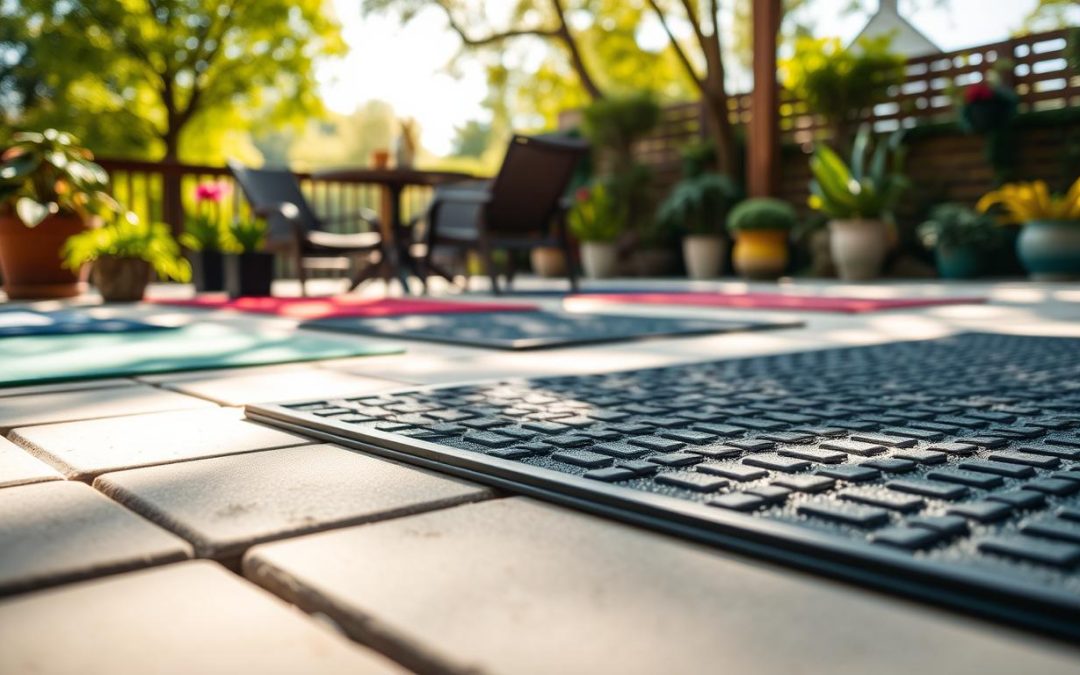
Outdoor rubber flooring is the practical answer to a long list of design and safety challenges — slippery terraces, hard playground surfaces, noisy patios, ugly garage entrances and concrete that turns dangerous in the rain. Modern outdoor rubber tiles combine weather resistance with shock absorption, anti-slip safety and an attractive finish that lasts for years.
What makes a rubber tile suitable for outdoor use?
Not all rubber flooring performs outside. Outdoor-rated rubber tiles use UV-stabilised binders, drainage-friendly profiles and granulate sized for freeze-thaw resilience. Look for products explicitly tested for outdoor exposure, with documented performance after multiple temperature cycles and prolonged UV exposure.
Where to use outdoor rubber tiles
- Terraces, balconies and rooftop gardens — slip-resistant comfort underfoot in any weather.
- Pool surrounds — barefoot-friendly, fast-draining and gentler than tile or stone.
- Playgrounds — critical fall height ratings that meet EN 1177 and ASTM F1292 standards.
- Garage and workshop entrances — protect concrete from oil, salt and abrasion.
- Garden paths and gym entries — easy walk-on access without mud or grit migration.
- Rooftop equipment pads — vibration isolation under HVAC and condenser units.
Key technical features to compare
When evaluating rubber tiles for outside use, focus on these specifications: thickness (15–50 mm is typical, with thicker products offering better impact absorption); density (higher density resists indentation); slip resistance (R-class or DIN 51097 ratings for wet barefoot use); UV stability (look for warranties of five years or more); and drainage design (sub-tile channels or perforations that move water away quickly).
Installation methods
Outdoor rubber flooring can be laid in three primary ways: loose-laid over an even, well-draining base (suitable for terraces and rooftops with no wind risk); puzzle-edged interlocking tiles that hold themselves together without adhesive; or fully bonded to concrete using polyurethane adhesives rated for outdoor exposure. Always start with a clean, level, slightly sloped base to ensure drainage and prevent ponding.
Maintenance in outdoor environments
Outdoor rubber tiles are remarkably low-maintenance, but a few simple habits extend their life. Sweep or blow off leaves and debris before they trap moisture. Rinse with a garden hose periodically to remove dust and pollen. Use a soft brush and mild detergent for stubborn marks. Avoid pressure washers on high settings, which can damage seams and binder.
Safety and compliance
For public-use installations such as playgrounds, schools and apartment complexes, confirm that the chosen product meets impact attenuation standards (EN 1177 in Europe, ASTM F1292 in North America) and slip-resistance classifications appropriate to wet barefoot or wet shod use. Reputable manufacturers supply complete test certificates with every shipment.
Cost considerations
Outdoor rubber tiles typically cost more per square metre than concrete or basic decking, but lifecycle costs tell a different story. With expected service lives of 10–20 years, almost zero maintenance and the avoidance of replacement injuries, slip claims and replacement labour, recycled rubber tiles deliver excellent long-term value.
Conclusion
Rubber tiles for outside use are one of the smartest specification choices for any project that combines weather exposure, foot traffic and safety obligations. Choose a UV-stable, outdoor-rated product, prepare a properly draining base, and you will enjoy decades of attractive, safe and low-maintenance outdoor flooring.