
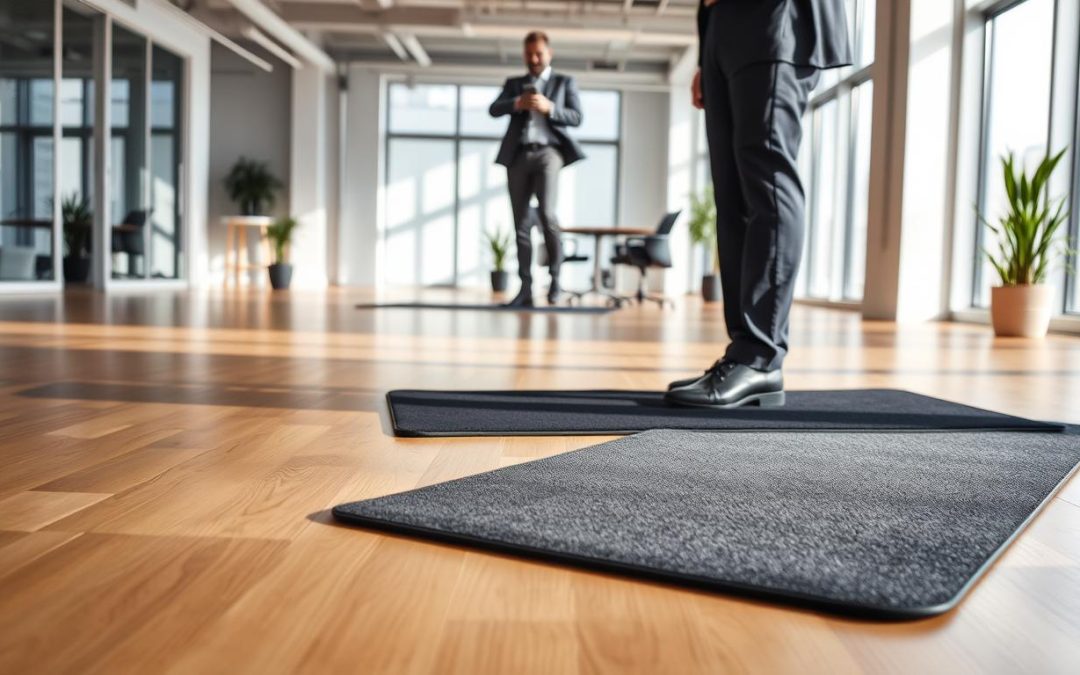
Many jobs require standing for long periods, like on factory floors, in kitchens, and at retail counters. This can cause discomfort, lower focus, and even long-term health problems.

Anti-fatigue mats offer a simple yet effective solution. They provide comfort flooring that eases the strain on legs and feet. This can greatly improve productivity and overall health.
Using ergonomic flooring like anti-fatigue mats is a cost-effective way to support worker health. It can also reduce absenteeism and boost job satisfaction.
Key Takeaways
- Prolonged standing can lead to health issues and decreased productivity.
- Anti-fatigue mats provide comfort and reduce strain on workers.
- Ergonomic flooring solutions support worker health and well-being.
- Implementing anti-fatigue mats can be a cost-effective measure.
- Improved worker comfort can lead to reduced absenteeism.
What is Anti-Fatigue Flooring?
Anti-fatigue flooring is a special cushioned flooring made to ease the pain and tiredness from standing on hard floors for a long time. It’s great for places where people stand a lot, like factories, hospitals, and shops.
This flooring is designed to make standing more comfortable. It lets your legs move a bit, which helps your blood flow better and lessens tiredness. It’s made from materials like rubber or vinyl, which are comfy, strong, and easy to clean.
Anti-fatigue flooring is good for your legs and feet. It makes standing softer, which reduces pressure and stops tiredness and pain. Also, it’s anti-slip, making workplaces safer by lowering the chance of slipping and falling.
In work places, anti-fatigue flooring helps keep workers healthy and productive. By choosing safe and comfy flooring, companies show they care about their employees. This can make workers happier and less likely to miss work.
Benefits of Anti-Fatigue Flooring
Industrial flooring solutions, like anti-fatigue mats, are key for worker well-being. They offer a comfy standing surface, easing leg and foot strain. This makes work more productive.
Anti-fatigue flooring has many benefits. Reducing fatigue is a big plus, keeping workers’ energy up. This boosts efficiency and productivity.
Reducing Fatigue and Increasing Efficiency
Anti-fatigue mats work by giving a cushioned surface. This encourages small movements, improving blood flow and comfort. The main benefits are:
- Enhanced worker comfort
- Lower risk of fatigue-related injuries
- More productivity from better focus
Using standing mats and other anti-fatigue solutions makes work healthier and more efficient. It helps employees and boosts the company’s success.
In terms of floor covering, anti-fatigue mats are a smart choice for many industrial places. They’re durable and easy to keep clean. This makes them a good pick for improving industrial flooring.
Where to Use Anti-Fatigue Mats
Anti-fatigue mats are great for many places, from factory floors to commercial kitchens. They help reduce the strain on people who stand for a long time. This makes them feel better and work more efficiently.
These mats are perfect for different settings, such as:
- Factory floors where workers are engaged in manufacturing processes
- Commercial kitchens where chefs and kitchen staff spend long hours standing
- Retail spaces where employees stand for extended periods serving customers
- Healthcare facilities where medical staff are on their feet constantly
Using ergonomic flooring like anti-fatigue mats is really helpful. They make hard floors more comfortable. This reduces the pressure on feet and legs, making work easier.
Anti-fatigue mats also make workplaces safer. They help prevent accidents by reducing tiredness. This improves safety at work.
When picking comfort flooring, choose mats that last long and are easy to clean. They should fit well in your work area. This way, they keep supporting worker health and productivity for a long time.
Key Features to Look For
Choosing the right anti-fatigue mat is crucial for comfort and performance. The best mat can boost worker productivity and health, mainly in places where standing for long times is common.
The material of the mat is a key factor. Mats are usually made from rubber, foam, or gel. Each material offers different levels of support and durability. For example, rubber mats are durable and great for busy commercial areas. Gel mats offer extra comfort and are best for places where people stand a lot.

The thickness of the mat is also important. Thicker mats are more comfortable and supportive. But, the right thickness depends on the workplace needs. For example, in areas with heavy machinery, a thicker mat is needed for better support and protection.
Slip resistance is another key feature. Mats with anti-slip surfaces help prevent accidents and make the workplace safer. Safety experts say, “A slip-resistant floor is essential for workplace safety, lowering the risk of slips, trips, and falls.”
“A good anti-fatigue mat can make a significant difference in the comfort and productivity of workers. It’s an investment in their health and well-being.”
When looking at anti-fatigue mats, consider these features too:
- Durability and resistance to wear and tear
- Ease of cleaning and maintenance
- Compatibility with the workplace environment
By carefully looking at these features, businesses can find the best anti-fatigue mat for their needs. This improves worker comfort and productivity.
How Anti-Fatigue Flooring Works
Anti-fatigue mats work by making you move slightly while standing. This helps your blood flow better. Standing on hard floors for too long can make you tired and uncomfortable. Anti-fatigue flooring helps by making your legs move a bit, which boosts blood flow and cuts down on tiredness.
These mats help your muscles and joints by making you move a little. This is great for jobs where you have to stand a lot, like in factories, hospitals, or shops.
Anti-fatigue mats are made to be comfy and ergonomic. They’re usually made of rubber or gel, which is soft but strong. This makes standing for a long time easier on your feet and legs.
Using fatigue-relief mats does more than just feel good. They can make your workplace healthier. They help you stay focused and avoid injuries. Plus, they’re simple to put in and keep up, making them a smart choice for many workplaces.
To wrap it up, anti-fatigue flooring helps by giving you a soft place to stand that makes you move. This makes standing more comfortable and helps your workplace be a better place to be.
Installation Tips for Anti-Fatigue Mats
Installing anti-fatigue mats right is key to avoid tripping and ensure comfort. It’s important to follow some guidelines to get the most out of them.
Start by cleaning and drying the floor before placing the mat. This step helps the mat stay in place. For ergonomic flooring to work well, it must be fixed correctly.
- Measure the area where the mat will go to get the right size.
- Pick a mat with anti-slip flooring to stop it from moving.
- Use the right adhesive or tape to fix the mat to the floor.
- Check the mat often for damage and replace it when needed.
By doing these things, your comfort flooring will help workers stay productive and healthy.
Also, keep these tips in mind:
- Make sure the mat fits with your floor type (like concrete, wood, or tile).
- Always follow the maker’s guide for setting it up.
- Check the mat after putting it in to make sure it’s fixed right and works as it should.
By focusing on these points, you can make your workplace safer and more comfy. This lets your anti-fatigue mats work their best.
Choosing the Right Anti-Fatigue Mat
Choosing the right anti-fatigue mat is key to better comfort and productivity at work. The right mat can greatly cut down on fatigue and discomfort for those who stand a lot.
When picking an anti-fatigue mat, several things matter. The type of industrial flooring you already have is very important. For example, if your floor is hard, you might need a thicker, more cushioned flooring mat for comfort.
How much foot traffic the area gets is also key. Busy areas need strong standing mats that can handle lots of use without wearing out. Also, think about what your employees need, like any health issues or comfort preferences.
The size of the mat is also very important. It should fit the workspace well. Also, think about the mat’s material and how easy it is to keep clean. This makes sure it works well with your workplace’s needs.
By looking at these points carefully, businesses can pick the best anti-fatigue mat. This improves comfort for employees and helps avoid fatigue problems.
Real-Life Success Stories
Many businesses have seen big changes after using ergonomic flooring. They noticed better health and work performance. This is thanks to anti-fatigue mats.
A manufacturing plant put fatigue-relief mats in their area. This led to a 25% drop in worker fatigue and a 15% boost in productivity in just six months.

In a retail setting, anti-fatigue floor covering made a big difference. It made staff feel more comfortable and cut down on foot and leg pain complaints.
Offices also benefit from ergonomic flooring. Using anti-fatigue mats under desks has made employees happier and less absent due to health issues.
- Improved worker health and comfort
- Increased productivity
- Reduced absenteeism
- Enhanced employee satisfaction
These stories show how important ergonomic flooring solutions are. They help keep employees healthy and make work better for everyone.
Safety Standards for Anti-Fatigue Flooring
Anti-fatigue mats must meet certain safety standards to avoid accidents at work. They must have anti-slip surfaces to lower the risk of falls. This makes the workplace safer for everyone.
The material of anti-fatigue mats is very important. They should be made of durable stuff. This way, they last longer and keep workers comfortable. Commercial flooring solutions, like these mats, need to handle a lot of foot traffic well.
Anti-fatigue flooring must be made with safety in mind. It should be made from materials that can handle chemicals and oils. Keeping the mats in good shape is also key to a safe work area.
Businesses should pick anti-fatigue mats that meet safety standards. This helps prevent accidents and makes the workplace healthier. Investing in safe, quality flooring shows a company cares about its employees’ well-being.
- Ensure the mats have anti-slip surfaces to prevent slips and falls.
- Choose mats made from durable, high-quality materials.
- Regularly inspect and maintain the mats to ensure they remain effective.
- Look for certifications that indicate compliance with safety standards.
The Environmental Impact of Anti-Fatigue Flooring
As we worry more about the planet, the greenness of anti-fatigue flooring matters a lot. Making and throwing away these mats can harm the environment. So, it’s key to think about how sustainable they are.
These mats come in different materials, some better for the planet than others. Eco-friendly flooring options are now out there. They’re made from stuff that can be recycled or made in ways that are good for the earth. For example, some are made from recycled rubber or eco-friendly PVC without bad chemicals.
The effect on the environment of fatigue-relief mats depends on what they’re made of and how they’re made. Mats from natural rubber or ones made to be recycled are better for the planet.
“The shift towards sustainable materials in the production of anti-fatigue mats is not just a trend, but a necessity driven by consumer demand and environmental responsibility.”
When picking anti-fatigue flooring, think about more than just how comfy it is for workers. Also, think about how it will affect the planet in the long run. Picking mats that last long and can be recycled helps a lot.
- Look for mats made from eco-friendly materials.
- Consider the manufacturer’s sustainability practices.
- Opt for mats that are designed to be recyclable.
By choosing wisely about anti-fatigue flooring, companies can help the environment. They can also make their workers happier and healthier.
Frequently Asked Questions (FAQs)
In this section, we’ll answer some common questions about anti-fatigue mats. They help make workplaces more comfortable.
Many people wonder about the durability of anti-fatigue flooring. How long does it last, and what affects its lifespan? A good anti-fatigue mat can last for years. This depends on the material and how much it’s used.
Maintenance is key. Cleaning anti-fatigue mats is easy. Just sweep or vacuum them often and mop with mild detergent. Always follow the maker’s cleaning tips to keep the mat in good shape.
“The right flooring can significantly impact worker comfort and productivity. Anti-fatigue mats are a simple yet effective solution for reducing fatigue and improving overall well-being in the workplace.”
Studies and people who use them say anti-fatigue flooring works well. It helps reduce fatigue and discomfort. These mats offer a soft surface, easing leg and foot strain. This helps keep your posture right and lowers the chance of muscle problems.
- Q: Are anti-fatigue mats suitable for all types of flooring? A: Most anti-fatigue mats are versatile. But, pick a mat that fits your floor type.
- Q: Can anti-fatigue mats be used in wet environments? A: Yes, but choose mats made for wet places. They should have slip-resistance.
- Q: How do I measure the correct size for my anti-fatigue mat? A: Measure the area for the mat. Think about your workspace layout and needs.
Knowing these FAQs helps businesses choose the right anti-fatigue flooring. This improves the health and comfort of their workers.
Conclusion: Investing in Your Workforce’s Health
Buying anti-fatigue mats is a simple way to boost worker productivity and health. Adding comfort flooring or cushioned flooring to the workplace greatly improves employee well-being.
Standing mats are key in lowering the risk of health problems from standing too long. They show employers care about their workers’ health by making the workplace more comfortable.
Anti-fatigue mats do more than just help health; they also make work more productive and efficient. This article has shown how the right flooring can greatly improve different work areas.
Choosing the right cushioned flooring and ensuring it’s installed correctly can lead to a healthier, more productive team. Getting standing mats is a smart move to make your workplace more comfortable and healthy.