
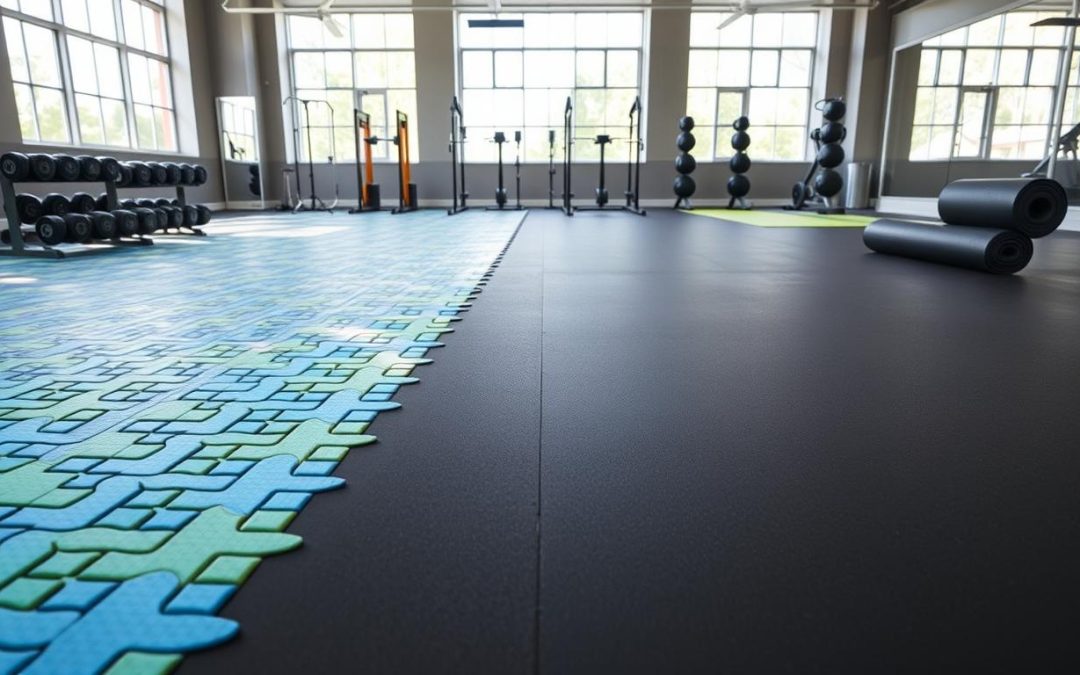
Durable and versatile, rubber flooring is now a top pick for many places. This includes busy gyms and home basements. Its slip resistance and wide range of designs make it perfect for both homes and businesses.

In gyms, rubber flooring tiles and rolls are big hits. They’re great at absorbing shock and lasting long. This makes them a safe and comfy choice for working out, helping to lower injury risks.
Key Takeaways
- Rubber flooring is a popular choice for gyms due to its durability and slip resistance.
- Puzzle-style rubber flooring tiles offer easy installation and flexibility.
- Rubber flooring rolls provide a seamless surface, ideal for high-traffic areas.
- The choice between tiles and rolls depends on specific gym requirements and preferences.
- Rubber flooring is suitable for both residential and commercial applications.
Introduction to Rubber Flooring Tiles
Rubber tile flooring options are a mix of function and style. They fit well in many places, from gyms to playgrounds. This makes them very versatile.
These tiles are tough and absorb shocks well. This is great for places where safety is key. Plus, they’re easy to install and keep clean, which is good for gyms and other busy areas.
Commercial rubber flooring tiles come in many designs and patterns. This lets you create unique looks. They’re perfect for odd-shaped rooms or where you want a special look.
Also, there are affordable rubber flooring options. They meet different budgets without losing quality. This makes rubber tiles a great choice for those wanting durable, customizable, and budget-friendly flooring.
Key Differences Between Puzzle-Style Tiles and Rolls
It’s important to know the differences between puzzle-style tiles and rolls for your gym’s flooring. Their design and functionality, like size and coverage, are key differences.
Size and Coverage
Puzzle-style rubber tiles are modular, fitting together like a puzzle. They come in sizes from 12 inches by 12 inches to 24 inches by 24 inches. These interlocking rubber tiles are great for small or odd-shaped spaces. They can be cut and fitted to cover complex areas easily.
Rubber rolls, on the other hand, are large sheets, often 4 feet or 6 feet wide. They can be cut to any length. This makes them perfect for big areas where you want fewer seams. The best rubber flooring tiles for big gyms might be rubber rolls. They offer a smooth installation.
Here are some key differences in size and coverage between puzzle-style tiles and rolls:
- Puzzle-style tiles offer flexibility for complex layouts.
- Rubber rolls provide a more seamless appearance for large areas.
- The size of the tiles can be adjusted by cutting them to fit specific spaces.
- Rubber rolls can be more efficient for covering large, open spaces.
When choosing between rubber flooring tiles and rolls, think about your gym’s needs. Consider the area’s size, layout complexity, and your preference for seams and appearance.
Advantages of Puzzle-Style Rubber Tiles
Puzzle-style rubber tiles bring many benefits to gym floors. They are easy to install, saving gym owners time and money. This makes setting up or changing the floor simple.
These tiles are great for gyms with odd-shaped floors. They can be cut to fit around obstacles, ensuring a smooth finish. Plus, they allow gyms to create a unique and fun space for their members.
- Customisation: Available in various colours and patterns, allowing for creative floor designs.
- Replaceability: Individual tiles can be replaced if damaged, reducing maintenance costs.
- Durability: Made from high-quality rubber, these tiles are designed to withstand heavy foot traffic and equipment.

Using durable rubber floor tiles in gyms makes workouts safer. The rubber absorbs shock, which can help protect joints. It also has a non-slip surface, making it safer in busy areas.
In summary, puzzle-style rubber tiles are a top choice for gym floors. They are easy to install, can be customised, and are very durable. They provide a practical and flexible solution for gyms of all sizes.
Downsides of Puzzle-Style Rubber Tiles
Puzzle-style rubber tiles are popular for gym floors but have some drawbacks. One major issue is the visible seams between the tiles. This can be a problem for gyms needing a seamless floor for certain activities or to keep clean.
Another big problem is that these tiles might not be good for very busy gym areas. The way they fit together can get damaged by heavy weights or impacts. This could cause the floor to become uneven or tiles to move over time.
Also, rubber tile flooring options can get slippery when they’re wet. This is a safety risk for gym-goers, which is a big worry in areas around cardio machines or where people do high-intensity workouts.
If gyms are looking for affordable rubber flooring, they need to think about these downsides. While these tiles are easy to put down and replace, their flaws might mean looking at other flooring options for some areas.
In summary, puzzle-style rubber tiles are a good choice for many gyms. But, their downsides like visible seams, not being suitable for heavy use, and being slippery when wet are things to consider. Gym owners should think about these points to see if these tiles are right for them or if they should look at other options.
Advantages of Rubber Rolls
Rubber rolls are becoming popular in gyms for their easy installation and long-lasting nature. They provide a smooth, continuous surface. This makes the gym look better and keeps it clean by stopping dirt from getting stuck in seams.
Durability is a key benefit of rubber rolls. They can handle lots of people and intense exercise, perfect for busy gyms. Their seamless appearance also adds a professional touch, great for fancy gyms.
Rubber rolls are also good value for big areas. They’re cheaper than puzzle tiles and quicker to put down. This saves money and time. Plus, they’re simple to install because they have fewer seams.
The main points about rubber rolls are:
- Seamless appearance, enhancing the gym’s aesthetic appeal
- High durability, capable of withstanding heavy use
- Cost-effective for large areas, reducing overall expenditure
- Easy installation, minimising labour costs and time
In summary, rubber rolls are a great choice for gyms. They’re durable, affordable, and look good. This makes them a favourite among gym owners who want their space to look and function well.
Downsides of Rubber Rolls
One major issue with rubber rolls is their challenging installation process. They don’t fit easily into unique spaces like interlocking tiles do. Rubber rolls need adhesives, which can be messy and take a lot of time to apply.
Installing rubber rolls requires a lot of care to get a smooth floor. Any air bubbles or wrinkles can cause tripping hazards. Also, the adhesive can release strong fumes, so good ventilation is key during installation.

Rubber rolls also have a limited flexibility in fitting irregular shapes or making changes during setup. If a part of the roll gets damaged or placed wrong, fixing it can be hard. This might ruin the whole floor.
On the other hand, durable rubber floor tiles, like interlocking ones, are more flexible and easier to install. They’re better for gyms with complex layouts or where changes might be needed later.
In conclusion, rubber rolls have their benefits, but their hard installation and limited flexibility are big downsides. Gym owners should think carefully about these points when choosing between rubber rolls and rubber flooring tiles for their gyms.
Cost Comparisons
Gym owners often face a dilemma when choosing between rubber tiles and rolls. The decision depends on understanding both the initial and long-term costs.
Rubber tiles cost more per square foot than rubber rolls. But, they are flexible and easy to replace. This can save money over time, mainly in busy gyms.
Rubber rolls are cheaper for big areas. They look good and are seamless. But, they need professional installation, which adds to the cost. Also, fixing a damaged roll is pricier than replacing a tile.
The choice between rubber tiles and rolls depends on the gym’s size and needs. Tiles might be better for smaller gyms or complex layouts. Rolls could be more affordable for large, simple areas.
- Rubber tiles offer ease of replacement and flexibility.
- Rubber rolls are cost-effective for large, straightforward areas.
- Consider both initial and long-term costs when making a decision.
In conclusion, choosing affordable rubber flooring for a gym requires looking at both upfront and ongoing costs. By considering these, gym owners can find a balance between budget and quality.
Maintenance and Care of Rubber Flooring
To keep your rubber flooring looking great, it’s key to know how to maintain it. Regular sweeping and mopping are vital to remove dirt and dust. This helps prevent wear and tear. For easy installation rubber tiles, cleaning is simple because you can take out and clean individual tiles.
For rubber rolls, cleaning is a bit more involved. The continuous surface can hold onto dirt and moisture. A gentle cleaning solution and a soft-bristled brush can tackle tough stains without harming the rubber. Always dry the floor well after cleaning to avoid slipping.
Spot-cleaning is also crucial. Quick action on spills and stains can stop them from setting in. For hard stains, a mix of water and mild detergent works well. But, avoid harsh chemicals or abrasive cleaners as they can damage the rubber.
Regular checks on your rubber flooring can also help. For best rubber flooring tiles, make sure the interlocking parts are in good shape. Worn-out tiles can cause uneven surfaces.
- Regularly sweep and mop the floor to remove dirt and dust.
- Use gentle cleaning solutions and soft-bristled brushes for more thorough cleaning.
- Dry the floor thoroughly after cleaning to prevent slipping hazards.
- Inspect the flooring periodically for signs of wear or damage.
By sticking to these maintenance tips, you can make your rubber flooring tiles last longer. Proper care not only keeps the flooring looking good but also makes it safer and healthier for everyone using the gym.
Conclusion: Choosing the Right Option for Your Gym
Choosing the right rubber flooring for your gym can seem hard. But, by looking at the good and bad of puzzle-style tiles and rolls, you can make a smart choice.
Whether to pick durable rubber floor tiles or rubber rolls depends on your gym’s needs. This includes the size of the space, your budget, and how long you want it to last. If you want something easy to put in and flexible, interlocking rubber tiles might be best.
But, if you need something cheaper for big areas, rubber rolls could be the answer. The best rubber flooring for gym depends on what you need and like.
Think about these points and know the ups and downs of each choice. This way, you can make a gym that’s safe, works well, and looks good.