
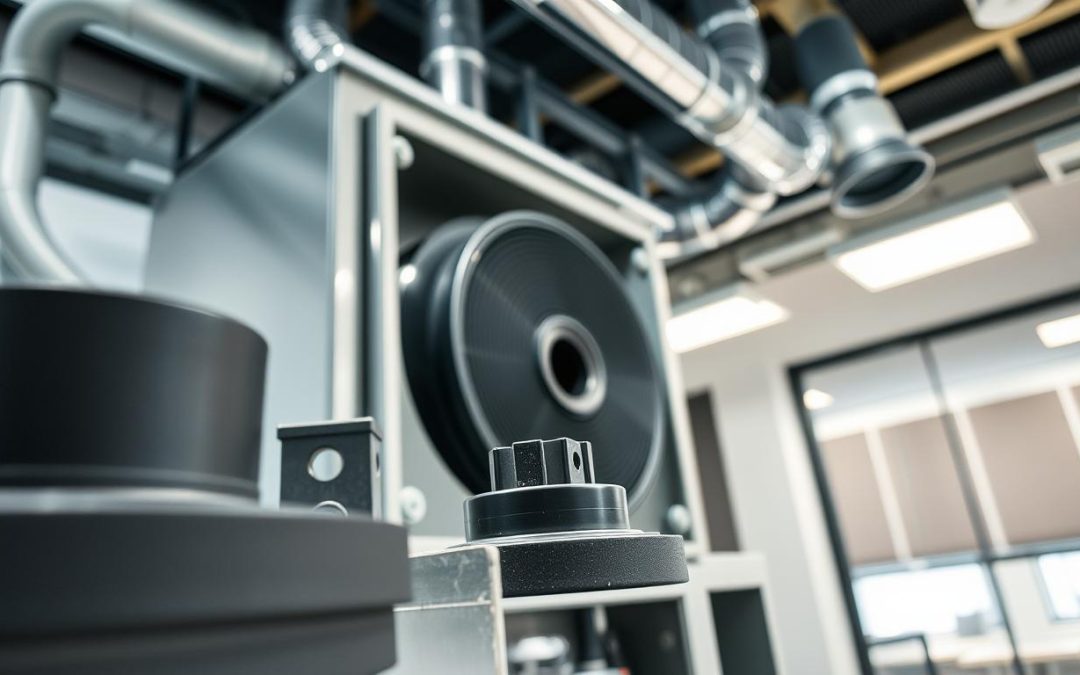
Mechanical and electrical equipment can make a lot of noise and vibration. This can cause damage and make things uncomfortable. It’s important to control vibration well to keep equipment in good shape and make the environment more comfortable.

Using HVAC vibration dampening solutions can really help. It cuts down the noise and vibration from heating, ventilation, and air conditioning systems. This makes the environment better and helps the equipment last longer.
Key Takeaways
- Effective vibration control is crucial for maintaining technical equipment.
- HVAC vibration dampening solutions reduce noise and vibration.
- Proper vibration protection prolongs equipment lifespan.
- A comfortable environment is ensured through reduced noise and vibration.
- Vibration control is essential for overall system efficiency.
Understanding HVAC Vibration Dampening
Learning about HVAC vibration dampening is key to quieter operation. It’s a vital part of making HVAC units less noisy. It uses different methods and materials to cut down on vibrations that travel to nearby structures, lowering noise levels.
Anti-vibration pads are a common way to dampen vibrations in HVAC equipment. These pads soak up the vibrations from the equipment, stopping them from spreading to other parts or the building. Their success depends on their material and design, made to isolate vibrations well.
Vibration dampening is more than just about noise. It also helps prevent damage to equipment and buildings. Too much vibration can cause mechanical failures, wear, and safety risks. With good vibration dampening, HVAC systems run smoother, needing less maintenance and repairs.
Other methods and materials, like springs, rubber mounts, and cork, are also used for dampening. The right choice depends on the HVAC system’s needs, like the equipment type, operating conditions, and needed vibration isolation.
Good vibration dampening is crucial for noise reduction in HVAC units. By grasping the basics and using the right techniques, we can greatly reduce HVAC noise. This makes spaces more comfortable for everyone.
Common Sources of Vibration in HVAC Systems
It’s vital to reduce vibrations in heating and cooling systems for their best performance. These vibrations can come from the equipment itself and how it’s installed.
Equipment like fans, compressors, and pumps in HVAC systems often cause vibrations. When these are tightly fixed to buildings, they can pass on vibrations. This can lead to noise and might harm the system’s performance.
How HVAC equipment is installed greatly affects vibration levels. For example, if parts are not properly aligned or balanced, vibrations increase. Also, if pipework and ductwork are not isolated from vibrating equipment, vibrations can spread.
Key factors influencing vibration include:
- Equipment design and manufacturing quality
- Installation practices, including alignment and balancing
- Rigid connections between equipment and building structures
It’s crucial to tackle these factors to cut down on vibrations in HVAC systems. Knowing where vibrations come from and how to lessen them can improve system performance and lower noise.
Impact of Vibration on Technical Equipment
Vibration can seriously harm HVAC equipment. It can damage the equipment, shake buildings, and pose safety risks. Vibration control for HVAC systems is key to avoiding these issues.
Vibration can wear down equipment faster, shortening its life and reducing efficiency. For example, vibrating machinery can loosen parts, causing mechanical failures. It can also mess with the performance of sensitive equipment.

To tackle these problems, HVAC vibration isolation solutions are vital. They help keep vibrating equipment separate from the rest of the system. This reduces vibration transmission, protecting equipment and improving building comfort and safety.
In summary, tackling vibration in HVAC systems is crucial. It keeps equipment in good shape, ensures safety, and boosts system performance. Using the right vibration control can bring long-term benefits.
Effective Vibration Dampening Techniques
Using the right methods to dampen vibrations can greatly reduce HVAC system noise. Anti-vibration pads for HVAC equipment are a top choice. They soak up vibrations, cutting down on noise.
There are many products for controlling vibrations, like anti-vibration mounts, spring hangers, and rubber absorbers. The right one depends on the HVAC system’s needs and how much dampening is required.
Anti-vibration mounts work well for equipment that shakes a lot. They can be rubber or spring-based, catching vibrations. Spring hangers also help by letting equipment move and absorb vibrations.
Rubber absorbers are a favourite for dampening vibrations. They’re often paired with other methods to boost their effect. Picking the right material and method is key for the HVAC system’s specific needs.
Key Considerations for Vibration Dampening
- Check how much vibration the HVAC equipment makes.
- Pick the best vibration dampening method or product.
- Make sure it’s installed correctly for the best results.
- Keep an eye on and maintain the dampening systems.
By using these effective techniques, you can greatly reduce noise in HVAC units. This makes the work environment better and helps the equipment last longer by reducing vibration wear.
Selecting the Right Dampening Materials
To reduce vibration’s effect on technical equipment, picking the right dampening materials is key. The choice depends on the application, like the equipment type and vibration level.
When picking materials for HVAC vibration dampening, several things matter. These include the equipment type, vibration level, and environmental factors like temperature and humidity.
Key Considerations for Dampening Material Selection
- The type of equipment being used and its specific vibration characteristics.
- The level of vibration and the frequency range that needs to be dampened.
- Environmental conditions, including temperature, humidity, and exposure to chemicals or moisture.
“The right dampening material can make a big difference in reducing vibrations in heating and cooling systems,” says an industry expert. “It’s crucial to assess the specific needs of your HVAC system to choose the most effective solution.”
The most common dampening materials in HVAC systems are viscoelastic materials, rubber mounts, and spring isolators. Each has unique properties for different uses.
Viscoelastic materials absorb vibrations over a wide range. Rubber mounts isolate vibrations well. Spring isolators handle heavier loads due to their strength.
Best Practices for Material Selection
- Assess the specific vibration characteristics of your HVAC system.
- Consider the environmental conditions in which the dampening materials will operate.
- Choose materials that are compatible with your system’s requirements.
By following these guidelines and picking the right materials, you can greatly improve your HVAC vibration dampening solutions.
Installation Tips for Vibration Dampening
The right installation of HVAC vibration isolators is key. When installed correctly, they can greatly reduce vibrations. This improves the performance and life of HVAC systems.
To get the best vibration control for HVAC systems, follow these tips:
- Always read and follow the manufacturer’s guidelines for the vibration isolators you’re using.
- Make sure the isolators are aligned properly with the equipment they support.
- Use the exact number and type of isolators recommended by the manufacturer or design.
- Check that the isolators are not overloaded or underloaded, as this can impact their performance.
- Regularly inspect the isolators during installation to ensure they are not damaged.
Correct Placement of Vibration Isolators
Where you place vibration isolators is very important. They should be placed to absorb vibrations from the HVAC equipment. This usually means putting them at the equipment’s mounting points, like the feet or base.

Following manufacturer guidelines is crucial. These guidelines are based on thorough testing and research. They ensure the isolators work as they should. By following these guidelines, installers can avoid common mistakes that might reduce the effectiveness of the vibration dampening solutions.
“The key to successful vibration isolation lies in the details of the installation process. Ensuring that each isolator is correctly installed and configured is crucial for achieving the desired level of vibration reduction.”
For complex HVAC systems, it’s wise to get help from vibration control experts or the manufacturer’s technical support. This ensures the installation is done right. It helps spot and fix any issues early, making the vibration dampening measures effective in the long run.
Regulatory Standards and Compliance
It’s crucial to follow rules to lessen HVAC noise and vibration’s effect on people inside buildings. Laws about noise and vibration in buildings aim to keep people safe and healthy.
The rules for HVAC systems are complex and differ by area. In the UK, for instance, the Control of Noise at Work Regulations 2005 outlines noise limits. The Building Regulations 2010 also guide noise control in buildings.
To meet these rules, building owners and managers must use noise reduction methods. This includes HVAC vibration dampening techniques. Important steps include:
- Picking equipment that vibrates less
- Using vibration isolators and dampeners
- Keeping HVAC systems well-maintained and checked regularly
Not following these rules can lead to big problems. These include fines, damage to reputation, and legal action. So, it’s key to know the rules about HVAC noise and vibration.
How to Assess the Effectiveness of Dampening Solutions
To check if anti-vibration pads work, we need to monitor and analyze them closely. First, we must know how to evaluate vibration control methods.
Monitoring Vibration Levels is a direct way to see if dampening solutions work. We use vibration meters or sensors to measure vibrations before and after using these solutions.
Ongoing monitoring is key to make sure dampening solutions keep working well. Regular checks help spot any problems or if the solutions start to fail.
Another important method is noise reduction analysis. By measuring noise levels before and after using anti-vibration pads, we can see how much noise is reduced.
- Use sound level meters to measure noise levels in decibels (dB).
- Compare the noise levels before and after the installation of vibration control measures.
- Analyze the data to determine the effectiveness of the dampening solutions.
By combining vibration level monitoring and noise reduction analysis, we can fully check if vibration control for HVAC systems works. This way, we ensure the solutions are effective, making the HVAC system quieter and more efficient.
Future Trends in HVAC Vibration Control
The HVAC industry is set for a big change. New technology and a focus on reducing vibrations are leading the way. HVAC vibration isolation solutions will be key in this transformation.
New technologies like smart materials and advanced designs are coming. They aim to better dampen vibrations. This could make equipment work more efficiently and save on maintenance costs.
Advanced materials with better vibration isolation are on the horizon. These materials will help dampen vibrations effectively. They will also meet the needs of today’s HVAC systems.
As the industry grows, HVAC vibration solutions will get more advanced. They will help make HVAC systems more efficient, reliable, and green.