
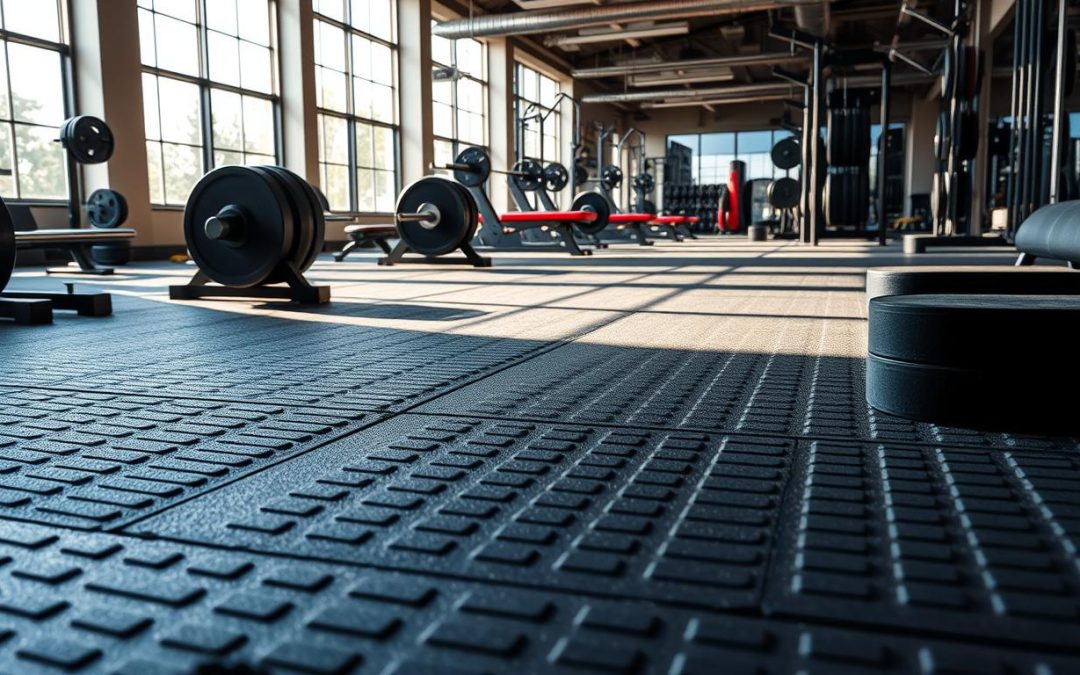
Setting up a home weightlifting zone means paying attention to the floor. It’s important to stop vibrations and prevent damage. We’ve looked at many commercial gym flooring types to find the best for heavy lifting.

The right gym flooring helps reduce the floor’s impact from heavy weights. This cuts down on noise and vibrations. In this article, we’ll look at the top choices for gym vibration isolation. This will help you make a safe and effective weightlifting area.
Key Takeaways
- Effective vibration isolation is crucial for heavy weightlifting zones.
- The right gym flooring can minimise noise and vibration.
- Various commercial gym flooring options are available for different needs.
- Choosing the right product depends on specific weightlifting requirements.
- Proper installation is key to optimal performance.
Understanding Gym Flooring and Its Importance
Rubber gym flooring and gym floor mats are key for a good weightlifting area. They protect and reduce noise. The right flooring makes weightlifting safer, more durable, and shock-absorbing.
Benefits of Rubber Gym Flooring
Rubber absorbs shock, keeps activities separate from the floor, and stops rattles. This reduces sound and vibrations. So, rubber gym flooring is perfect for weightlifting zones.
- Reduce the impact of dropped weights on the floor
- Minimise noise levels, creating a more pleasant environment for gym users
- Provide a non-slip surface, enhancing safety during weightlifting activities
Choosing the right gym flooring is important. Think about durability, upkeep, and cost for your weightlifting area.
The Role of Vibration Isolation in Weightlifting
Weightlifting zones need more than tough flooring; they require vibration isolation. This is to lessen the impact of heavy exercises. Activities like deadlifts and squats create a lot of vibrations. These vibrations can affect the lifter’s stability and the gym’s overall environment.
Vibration isolation is key for a safe and effective training area. It reduces the noise and vibrations from dropping weights. This protects the equipment and the gym’s structure.
To dampen sound from deadlifts and squats, two things are essential: thickness and density. Thicker, denser flooring materials absorb impact better. This reduces vibrations and noise.
When picking high-impact gym flooring, look at its vibration isolation ability. There are many gym flooring options, from rubber mats to engineered wood. Each has its own way of handling vibrations.
- Rubber flooring is known for its shock absorption.
- Engineered wood flooring balances looks with vibration dampening.
- Special underlayment materials can boost the chosen flooring’s vibration isolation.
Understanding vibration isolation in weightlifting helps gym owners choose the right gym flooring options. This creates a better training space. It improves the training experience and makes the gym safer and more durable.
Top Gym Flooring Materials for Weightlifting
Choosing the right gym flooring is key for weightlifting areas. It affects the training experience. Interlocking gym tiles are popular for their durability and easy setup.
Interlocking rubber tiles are great for weightlifting zones. They offer a shock-absorbing surface. This reduces joint impact during heavy lifts, improving performance and safety.

Interlocking gym tiles are versatile. They fit well in various gym settings, from commercial gyms to best gym flooring for home gyms. Their design makes it easy to customize and expand, perfect for gyms of all sizes.
These tiles also come in many colours and designs. This lets gym owners personalize their space. For home gyms, this is important for creating a motivating environment.
When picking gym flooring for weightlifting, consider durability, shock absorption, and maintenance. Interlocking rubber tiles excel in these areas. They are a top choice for creating a safe and effective weightlifting zone.
- Ease of installation and customization
- Durability and resistance to heavy wear
- Shock absorption for reduced impact on joints
- Aesthetic versatility with various colours and designs
Choosing the right flooring can greatly improve the training experience for weightlifters. Whether it’s a commercial gym or a home workout space, interlocking gym tiles are a great option for weightlifting areas.
Key Features to Look for in Flooring
Gym flooring is more than just looks; it must meet certain standards. A good gym floor can lower injury risks and boost performance in weightlifting and other exercises.
For gym flooring installation, several important features need to be considered. These include thickness, density, and durability.
The thickness of the flooring is key. It affects how well the floor absorbs shock and reduces noise. Thicker floors are better at isolating vibrations, perfect for areas with heavy weightlifting.
Density is also crucial. It impacts the floor’s durability and how well it performs. A denser floor lasts longer and withstands more wear and tear.
Durability is vital too. Gym floors face a lot of use and can get hit by dropped weights. A durable floor can handle these impacts and needs less upkeep over time.
Importance of Proper Installation
Getting gym flooring installation right is as important as picking the right material. Bad installation can cause uneven floors, lower performance, and more injury risks.
- Ensures the floor is level and even, reducing tripping hazards.
- Maximizes the floor’s performance characteristics, such as shock absorption and vibration isolation.
- Enhances the overall durability of the flooring by preventing gaps or weak points.
By focusing on these key features and proper installation, gym owners can create a safe and effective weightlifting area. This meets the needs of their users.
Leading Brands in Gym Flooring
Brands like Flooring Inc are at the forefront for gyms needing tough and flexible flooring. They have a variety of products for heavy weightlifting areas. High-quality rubber flooring rolls and interlocking tiles are their best sellers, offering both function and safety.
Living.Fit is also a big name in commercial gym flooring solutions. Their products can handle tough workouts and heavy equipment. Experts say, “The right flooring can greatly reduce joint and equipment impact, making the gym experience better.”
“A good flooring system is not just about durability; it’s also about maintenance and aesthetics.”
Different floors need different care. Rubber flooring, for example, is easy to clean with a damp mop and stands up to many chemicals. But, some floors might need more cleaning and special products.
- Rubber flooring rolls are durable and easy to install.
- Interlocking tiles offer versatility and can be customized to fit different gym layouts.
- Some brands offer specialized coatings to enhance durability and slip resistance.
In summary, top brands like Flooring Inc and Living.Fit offer a variety of high-quality floors. By looking at durability, maintenance, and looks, gym owners can choose the best flooring for their places.
Installation Considerations for Gym Flooring
Gym flooring installation is more than just laying down a new floor. It’s about making a safe and durable space for weightlifting. The process involves several key considerations to ensure the flooring meets the demands of a commercial gym setting.
One of the main decisions is whether to do the installation yourself or hire professionals. DIY installation can save money and is good for those with flooring experience. But, it takes a lot of time and effort, and mistakes can be expensive to fix.
Professional installation means the job is done right and quickly. Professionals have the skills and tools for complex jobs. They also offer warranties, which is great for commercial gyms where the flooring gets a lot of use.

Choosing between DIY and professional installation depends on the flooring type. Some materials are easy to install yourself, like click-lock systems or adhesive-backed tiles. Others need special tools or expertise.
Here are some key considerations for installing gym flooring:
- Ensure the subfloor is level and clean before installation.
- Follow the manufacturer’s instructions for the specific flooring product.
- Use the correct tools and materials to avoid damaging the flooring.
- Consider the acclimation period for the flooring material before installation.
By carefully considering these factors and choosing the right installation method, gym owners can ensure their flooring is safe, durable, and high-performance for their members.
Comparing Prices: What to Expect
Gym flooring prices vary a lot. It’s key to understand these costs to make a good choice. When setting up a home gym, flooring costs are a big factor.
The price of rubber gym flooring and gym floor mats changes based on several things. These include the material’s thickness, quality, and the brand’s reputation. For example, top-notch rubber flooring for heavy weight zones costs more than basic mats.
- Material Quality: High-grade materials last longer and absorb vibrations better. They are usually pricier.
- Thickness: Thicker flooring absorbs shocks better. It’s also more expensive.
- Brand: Well-known brands charge more for their gym flooring. This is because of their expertise and warranties.
- Installation Costs: Some flooring is easy to install yourself. Others need a pro, which adds to the cost.
Here are some price ranges for common gym flooring:
- Basic gym floor mats: £0.50 to £2 per square foot
- Rubber gym flooring rolls: £1 to £3 per square foot
- High-end interlocking tiles: £2 to £5 per square foot
When looking at prices, think about the long-term value too. Even if durable flooring costs more at first, it can save money later. This is because it might not need to be replaced as often.
Specialized Flooring for Heavy Equipment
Gyms with heavy weightlifting zones need special flooring. This flooring is made to handle the shock of heavy weights and equipment. It reduces the floor’s strain and the risk of damage.
High-impact gym flooring is very durable. It’s made from heavy-duty rubber. This makes it last longer and keeps the gym safer by lowering accident risks.
Choosing the right gym flooring options is key. For areas with heavy equipment, you might need thicker, more resilient flooring. It should also absorb shock well to protect the floor and equipment.
Here are some important features to look for in high-impact gym flooring:
- High-density rubber construction for enhanced durability
- Excellent shock absorption capabilities to reduce impact
- Slip-resistant surface for improved safety
- Easy maintenance to keep the floor in good condition
Investing in the right gym flooring options makes your gym safer and more durable. It improves the gym experience and cuts down on maintenance costs over time.
Gym Vibration Isolation Products
Vibration isolation products are a game-changer for heavy weightlifting zones. They reduce the impact of heavy weights on the gym floor. This minimizes vibration and noise, making workouts better and keeping the building safe.
Interlocking gym tiles are a top pick for gym flooring. They’re easy to install and work well at isolating vibrations. Second Skin Stomp Mats, for example, absorb impact. This reduces noise and vibration from dropped weights.
Rubber mats, like Tractor Supply ¾” Rubber Stall Mats, are also great. They’re durable and isolate vibrations well. This makes them perfect for areas with heavy equipment.
When picking gym vibration isolation products, look at durability, ease of installation, and vibration isolation. The best gym flooring for home gyms combines these. It ensures a safe and effective workout space.
- Durability: The product should withstand heavy use.
- Ease of Installation: Products that are easy to install save time and labor costs.
- Vibration Isolation: The primary purpose of these products is to reduce vibration and noise.
Choosing the right gym vibration isolation products makes gyms safer and more comfortable. This improves the workout experience for everyone.
Customer Reviews: What Gym Owners Are Saying
UK gym owners talk about their experiences with different gym flooring products. They stress the importance of proper gym flooring installation and upkeep. Many praise rubber flooring for reducing noise and vibration, making their gyms more comfortable for clients.
A gym owner from London said, “Installing rubber flooring cut down noise complaints from our weight area. It’s been a huge improvement for us.”
“The rubber flooring’s durability is amazing. It’s been over a year, and it looks brand new. Plus, the upkeep is simple, which is a big plus for us.”
Another gym owner from Manchester shared their thoughts. “We were worried about the cost of new flooring, but it was worth it. The noise reduction and safety boost have been huge benefits.”
For gym flooring maintenance, regular cleaning and checks are crucial. One owner mentioned, “We’ve had to replace some parts due to heavy use, but overall, the flooring has been very durable.”
- Effective noise reduction
- Improved safety
- Durable and long-lasting
- Easy maintenance
These reviews show how vital it is to pick the right gym flooring and ensure proper installation. By doing this, gym owners can make their gyms safer and more enjoyable. They also save on maintenance costs over time.
Future Trends in Gym Flooring
The gym flooring industry is set for a big change. This is thanks to new tech and a focus on being green. Gym owners and fitness fans want the best floors, and makers are coming up with new ideas.
There’s a big push for eco-friendly gym floors. People are choosing floors made from recycled rubber and wood that’s good for the planet. This way, gyms can feel good about their choice.
Smart flooring is another big trend. Floors with sensors can track how often they’re used and spot problems early. This makes gyms better and helps floors last longer.
We can expect even more cool gym floor ideas soon. By keeping up with these changes, gym owners can make their places the best they can be. This keeps members happy and coming back.