
In today’s world, effective soundproofing is key for better acoustic comfort. Thin walls and noise pollution are big problems. But, the right materials can help solve these issues.

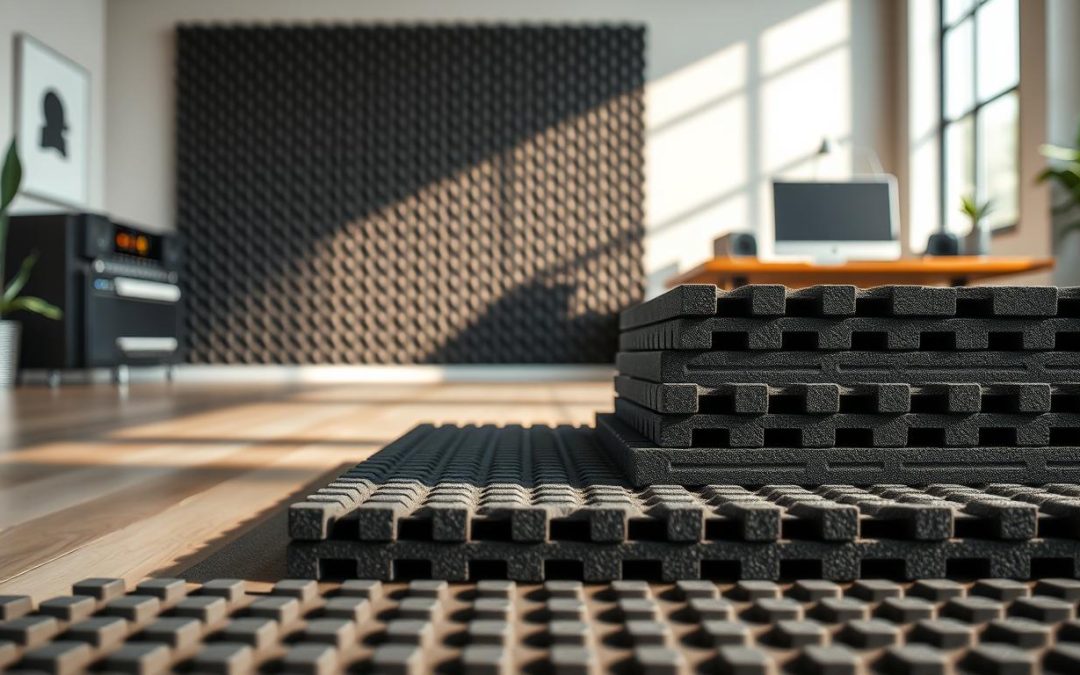
Acoustic rubber mats might be a good choice for soundproofing walls. These mats aim to cut down noise and boost sound quality.
Looking into soundproofing materials, it’s vital to see how well acoustic rubber mats work. They could make our living spaces quieter.
Key Takeaways
- Acoustic rubber mats can be an effective solution for soundproofing.
- Soundproofing is crucial in today’s dense construction era.
- The right soundproofing materials can significantly improve acoustic comfort.
- Reducing noise transmission is key to achieving a quieter environment.
- Acoustic rubber mats are designed to improve overall acoustic performance.
Understanding Soundproofing and Its Importance
With more noise around us, knowing about soundproofing is key. It helps block airborne and impact sounds between rooms. This makes spaces more comfortable to be in.
Soundproofing uses materials that soak up sound. This is important for a quiet place to live or work. It’s vital in noisy areas or homes with many people.
Soundproofing boosts acoustic insulation and cuts down noise pollution. It makes spaces quieter and more private. This improves our quality of life.
One big plus of soundproofing is noise reduction. It stops a lot of noise from getting in or out. This makes a room perfect for relaxing, working, or focusing.
- Reduces noise pollution
- Improves acoustic comfort
- Enhances privacy
Knowing about soundproofing and its benefits helps us choose the right solutions. It’s crucial for homes, offices, or recording studios. Good soundproofing changes a space’s quality a lot.
Common Soundproofing Materials
Knowing about soundproofing materials is key to making a good choice. There are many materials, each with its own strengths and uses.
Acoustic panels are a top choice for soundproofing. They soak up sound waves, cutting down on echo and reverberation. You can put them on walls, ceilings, or corners for best results.
Sound-absorbing foams are also popular. They’re light, simple to put up, and can be shaped to fit any space. They’re great for DIY projects, as they’re easy to attach to walls or ceilings.
Fiberglass insulation is another common soundproofing tool. It helps block noise through walls and ceilings. But, it needs to be handled carefully to avoid skin and breathing problems.
Rubber mats are becoming more popular too. They’re great at stopping impact noise, like footsteps. You can place them under flooring or in wall assemblies to boost soundproofing.
When picking soundproofing materials, think about what you need. Consider the noise type, room construction, and how much soundproofing you want.
- Acoustic panels for absorbing sound waves
- Sound-absorbing foams for easy DIY installation
- Fiberglass insulation for reducing noise transmission
- Rubber mats for impact noise reduction
By learning about the various soundproofing materials and their uses, you can find the perfect solution for your soundproofing needs.
How Sound Travels Through Walls
Sound can move through walls in two main ways: airborne and structural. Airborne sound travels through the air and then the wall. This is common in homes, where you can hear conversations, music, or TV noise from other rooms.
Structural sound, on the other hand, vibrates through the building’s structure. This includes walls, floors, or ceilings. Footsteps, slamming doors, or construction noise are examples of structural sound.

Many things affect how sound travels through walls. The wall’s construction, materials, and any gaps or weaknesses are important. For example, walls with multiple layers of drywall or acoustic rubber mats can block sound better.
The wall’s mass and density also matter. Thicker, heavier walls block sound more effectively. Windows, doors, and gaps around them can weaken a wall’s soundproofing.
- The type and quality of the wall’s construction materials.
- The presence of any gaps or weaknesses in the wall.
- The effectiveness of any soundproofing measures implemented, such as acoustic insulation.
Knowing these factors is key to effective soundproofing techniques and noise reduction. By tackling both airborne and structural sound, homeowners can make their living space quieter.
Advantages of Acoustic Rubber Mats
Acoustic rubber mats are a big deal in soundproofing. They bring lots of benefits for DIY projects. One key advantage is how well they reduce noise.
These mats soak up sound energy, cutting down on noise that moves through walls. This makes spaces quieter and more comfy. Plus, they are durable and long-lasting, making them a smart buy for soundproofing.
Installing them is also easy. They can be cut to fit and put behind walls. This makes them great for DIY fans. Here are some main benefits of using acoustic rubber mats:
- Effective noise reduction
- Durable and long-lasting
- Easy to install
- Versatile for various soundproofing applications
Acoustic rubber mats are also good value for money. They offer a balance between performance and price. This makes them a good choice for those watching their budget. They help you reach your soundproofing goals without spending too much.
Acoustic rubber mats are a top pick for soundproofing. They are effective, durable, and easy to put in place. It’s easy to see why they’re popular among DIY fans and pros.
Is It Worth Investing in Soundproofing?
Soundproofing is more than just cutting down noise. It’s an investment in your well-being and property’s value. By soundproofing your home, you make it more peaceful and comfortable.
The main benefits of soundproofing include better mental and physical health. Chronic noise can cause stress and anxiety. Soundproofing helps reduce these risks, leading to a healthier life.
From a financial view, soundproofing is a soundproofing investment. It can boost your property’s value, making it more appealing to buyers. This is crucial in noisy urban areas.
When thinking about soundproofing, look at the long-term gains. The initial cost might seem high, but the long-term benefits, like energy savings, can save you money over time.
Here are some key soundproofing tips to remember:
- Check your current noise levels to see how much soundproofing you need.
- Pick the right soundproofing materials for your needs.
- Think about getting professional help for the best results.
In summary, soundproofing is a smart investment. It improves your life, health, and property value. By understanding the costs and benefits, you can decide if it’s right for you.
Installation Tips for Acoustic Rubber Mats
DIY soundproofing projects often involve acoustic rubber mats. This process is easier than you might think. With the right preparation and a few simple steps, you can effectively reduce noise transmission through your walls.
Before you start, make sure the surface is clean and dry. Any dirt or moisture can ruin the mats’ adhesive. Proper preparation is key to a successful installation.
Measure the area where you’ll install the mats and cut them to size. Use a utility knife or sharp scissors for this. It’s crucial to be precise to avoid gaps or overlaps that could affect soundproofing.

After cutting, apply the adhesive as the manufacturer suggests. This usually means a thin, even layer on the mat’s back. Carefully align the mat with your wall and press it firmly, starting from the center. This helps avoid air bubbles.
You might need to use additional fastening methods, like mechanical fixings. This depends on your wall type and the manufacturer’s advice. Always follow the manufacturer’s instructions for the best results.
By following these installation tips for acoustic rubber mats, you can make your DIY soundproofing project more effective. This will help create a quieter and more comfortable living or working space.
Comparing Acoustic Rubber Mats to Other Solutions
Acoustic rubber mats are a top pick for soundproofing. But how do they compare to other materials? It’s key to look at them side by side to choose wisely.
Acoustic panels are another option. They soak up sound, perfect for cutting down echoes. Yet, they might not block sound as well as rubber mats do between rooms.
Mass loaded vinyl is also a contender. It’s a vinyl sheet filled with metal, great for walls and ceilings. But, it’s harder to put up than rubber mats. “Mass loaded vinyl is a game-changer for soundproofing,” says a top expert, “but it needs careful installation to work best.”
Looking at these materials, we see effectiveness, ease of installation, and cost matter. Rubber mats hit a sweet spot, offering solid soundproofing and being simple to set up.
- Acoustic rubber mats: Effective for soundproofing, easy to install, and moderately priced.
- Acoustic panels: Ideal for echo reduction, less effective for sound transmission.
- Mass loaded vinyl: Highly effective for soundproofing, challenging to install, and generally more expensive.
In summary, acoustic rubber mats are a standout choice. They offer great soundproofing, are easy to put in, and are priced right. By weighing these options, you can pick the best for your needs.
Additional Soundproofing Techniques
Using acoustic rubber mats is just the start. Other methods like decoupling, sound absorption, and adding mass are also key. Together, they can make your soundproofing even better.
Decoupling means keeping surfaces apart to stop sound from passing through. You can do this by using staggered studs or resilient channels in walls.
- Staggered studs: This method uses two sets of studs, one on each side of the wall, to block sound.
- Resilient channels: These metal channels help separate drywall from studs, cutting down on sound.
Sound absorption is vital too. It uses materials that soak up sound, making rooms quieter. Acoustic panels are a top choice for this.
Mass addition is simple yet effective. Adding weight to walls, like extra drywall or mass-loaded vinyl, boosts soundproofing. This is because more mass means better sound blocking.
- Extra drywall: Adding more layers can make walls soundproof better.
- Mass-loaded vinyl: This vinyl sheet, filled with heavy metal, can be stuck on walls for better soundproofing.
By mixing these methods with acoustic rubber mats, you can make your soundproofing even stronger. This leads to less noise and a quieter home.
Conclusion: The Best Soundproofing Solution for Your Home
Choosing the right soundproofing solution depends on your specific needs. Acoustic rubber mats are a good option for many situations. They offer effective sound reduction and are easy to install.
When picking soundproofing materials, think about how much soundproofing you need. For example, acoustic rubber mats are great for home studios or bedrooms. They help reduce noise well.
Using soundproofing tips and the right materials can greatly improve your home’s sound quality. Acoustic rubber mats are a handy solution for different places, from homes to offices.
What works best for soundproofing depends on a detailed look at your space and how much sound you want to block. By exploring the options and techniques we’ve talked about, you can make a smart choice. This will help you achieve great soundproofing in your home.